


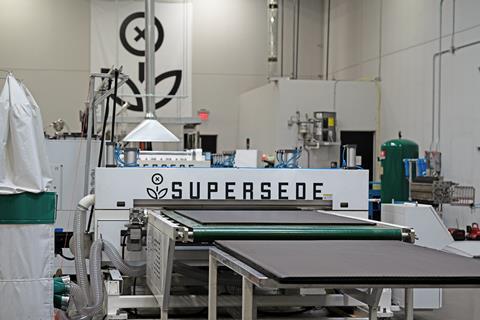
Phoenix-based Supersede secures investment to scale production of its structural sheathing engineered from recycled plastics.
Supersede, a Phoenix, AZ–based materials company, has secured $10 million in seed funding to scale production of its groundbreaking Supersede marine board — a cost-effective and recyclable replacement for marine-grade plywood. The funding consists of $5 million in convertible debt and $5 million in senior secured equipment financing.
The investment round includes participation from a major US building products distributor, circular economy–focused firm Closed Loop Partners, multiple angel groups, and strategic individual investors.
This funding comes at a pivotal time as supply chain instability and material costs increase, particularly amid rising trade barriers. Supersede is positioned to disrupt the US market for structural wood panels, valued at over $30 billion. Its solution addresses critical needs in boat, RV, and modular home manufacturing sectors, where marine-grade plywood has long been the standard despite significant drawbacks.
The company launched its marine board line in late 2024.
The Supersede marine board offers a 100% waterproof, rot-proof, and recyclable alternative to plywood that integrates seamlessly into existing manufacturing workflows, according to the company. Using recycled polypropylene (rPP), the company's patented extrusion process creates durable, high-strength structural panels that outperform traditional plywood in water resistance, fastener retention, compressive strength, and durability.
"The Supersede marine board is the first real replacement to marine-grade plywood that meets the demands of marine and outdoor construction, and solves the core challenges faced by manufacturers today, from rot, warping, and inconsistent supply to toxic exposure risks for workers," said Sean Petterson, CEO and co-founder of Supersede. "This funding is a validation of the product-market fit and growing customer demand, and it's enabling us to scale faster than we imagined — including building a second manufacturing facility that will triple our production capacity and add over 50 new jobs."
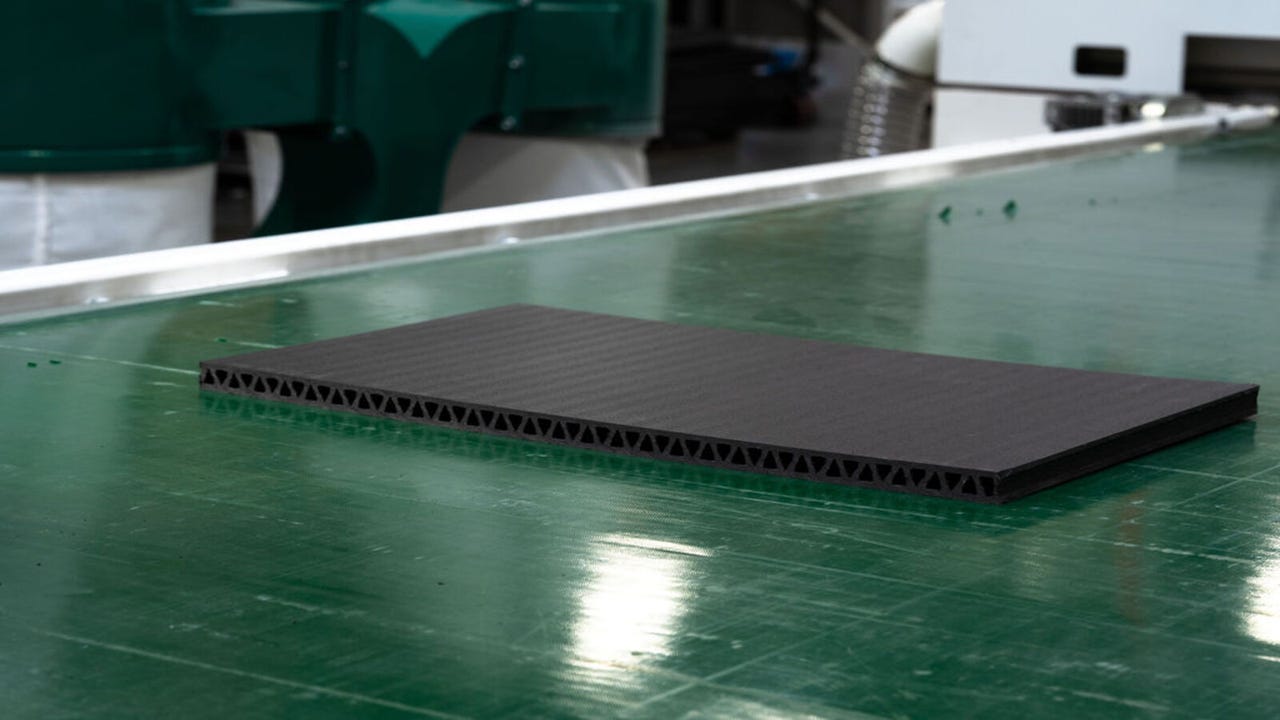
Using recycled polypropylene, the company's extrusion process creates durable, high-strength structural panels that outperform traditional plywood in water resistance, fastener retention, compressive strength, and durability. Image courtesy of Supersede
While the new facility's location is still being finalized with an announcement expected later this year, current production is already driving greater efficiencies. Supersede's solution eliminates multiple manufacturing steps, with no sanding, sealing, or drying required, reducing labor costs and increasing throughput.
The panels eliminate toxic chemicals like formaldehyde and chromated copper arsenate (CCA), improving safety for workers and end users. The company also plans to localize feedstock sourcing, reducing transportation emissions and creating manufacturing jobs in underserved regions.
Supporting closed-loop recycling, Supersede operates a buyback program where offcuts and end-of-life products can be reprocessed into new boards, helping manufacturers achieve zero-waste targets without compromising performance.
Closed Loop Partners has proven to be a valuable partner. The company comprises three key business segments — an investment firm, operating group, and innovation center.
"We see opportunity for more efficient materials management in the built environment, a sector that often sees high rates of material loss to landfills, and now faces material shortages and delays," said Kristin Taylor of Closed Loop Partners. "Supersede is using post-industrial feedstock that is otherwise unrecoverable in traditional recycling markets today. By turning this material into durable building products, Supersede is accelerating a more domestic, value-added, resilient circular economy."
The potential environmental impact is substantial. For every 72 sheets of 1/2-foot plywood displaced, one tree is saved. Additionally, Supersede's manufacturing process eliminates volatile organic compounds, adhesives, and waste while providing an effective solution for plastic recycling, helping counter the spread of microplastics entering the ocean.
Related:Thieme Uses Covestro's Baysafe EA Foam for Auto Safety Components in Multiple Applications
"This isn't just an upgrade to the legacy plywood industry — it's a long overdue leap forward," Petterson added.

-p-500.jpg)
.png)
.png)
)%20(LinkedIn%20Post)%20(5).png)



.svg)
